Read Before Committing
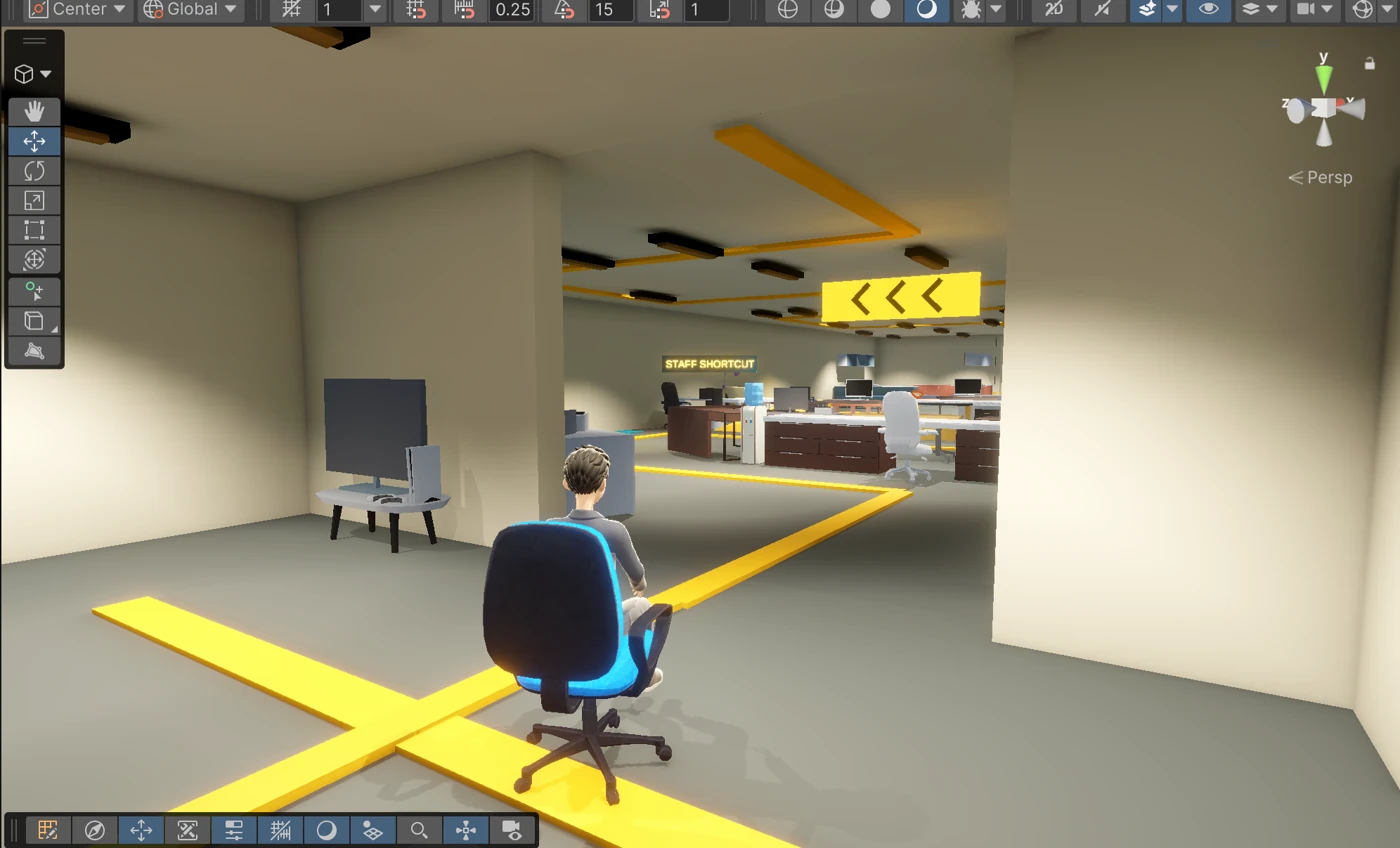
Long sightlines and early route cues let players steer before the chair catches up.
Solo video game project
An arcade racer about mastering an unruly office chair in a chaotic workplace.
A two-week solo prototype examining expressive chair physics, recovery loops, and how players learn to manage instability.


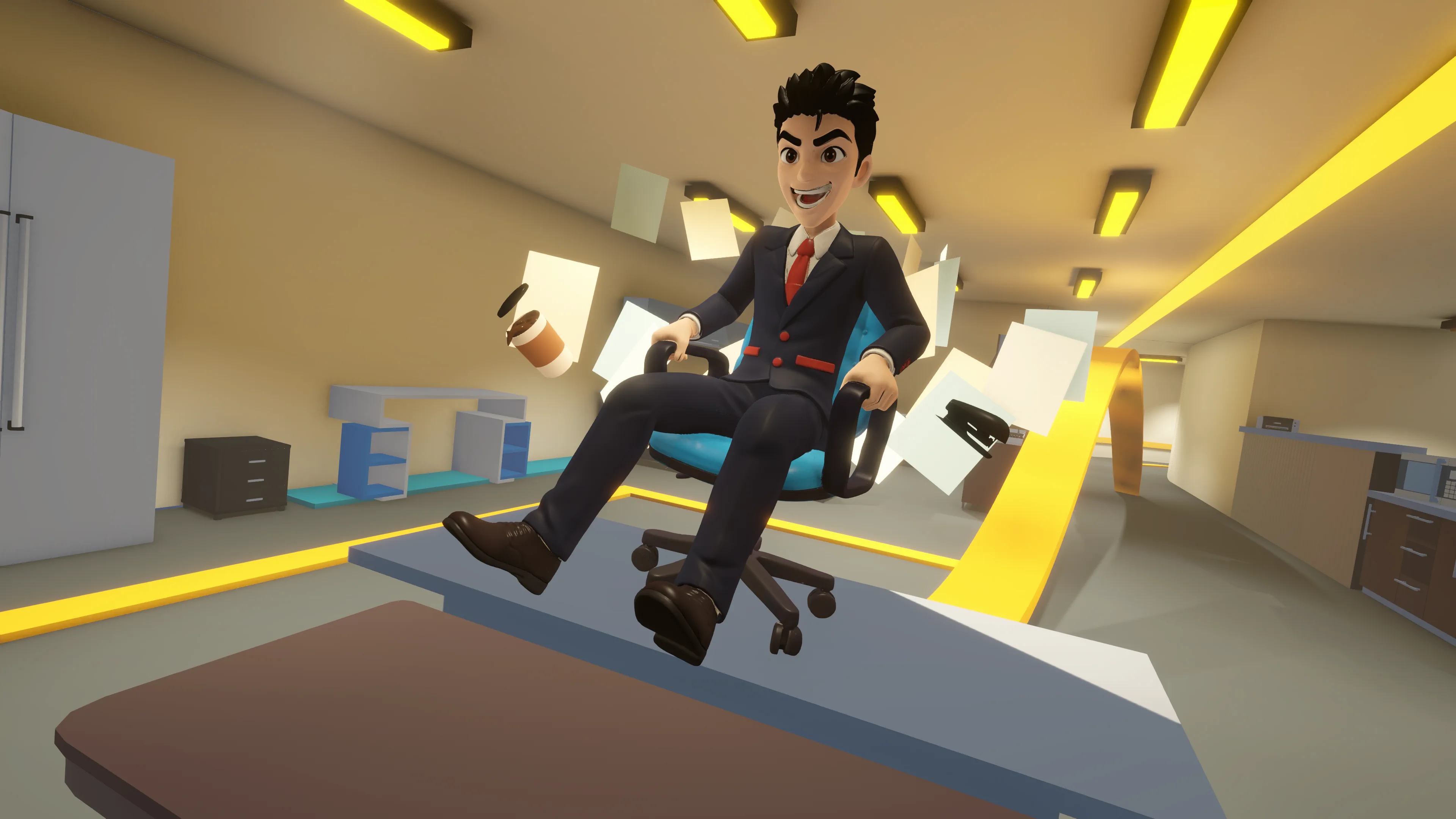
Clock Out is an exaggerated arcade racing game using office chairs as vehicles, transforming mundane office spaces into high-speed, chaotic, and comedic adventure playgrounds.
It's not a realistic physics simulator, nor a strict racing game demanding perfect racing lines. Core fun emerges from maintaining control at the edge of chaos and pulling off last-second recoveries.
In previous projects, I focused on narrative-driven and experimental experiences. With Clock Out, I wanted to shift direction and create something lighthearted, comedic, and centered on simple joy.
The goal was to design a game that makes players laugh at their own chaos, feel satisfaction from pulling off impossible recoveries, and experience the pure fun of mastering something playful and absurd.
The handling separates player intent, chair facing, and carried momentum. A segmented rig and jelly deformation then make those forces visible through motion.
Mouse input places a target ahead of the chair. The body catches it quickly while velocity turns more slowly, preserving drift without making steering feel delayed.
The steering rig could not be loaded.
Drag horizontally to steer
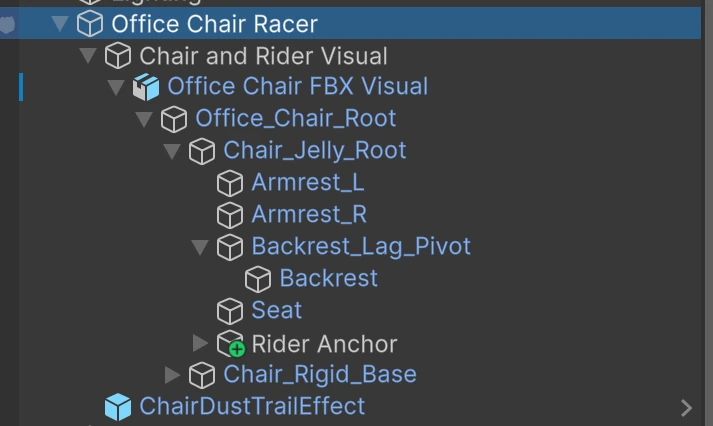
The chair is built as a linked assembly rather than a single rigid mesh, allowing every impact to register through a specific part.
The chair assembly could not be loaded.
Visual deformation translates movement forces into squash, stretch, and delayed recovery without altering the underlying chair physics.
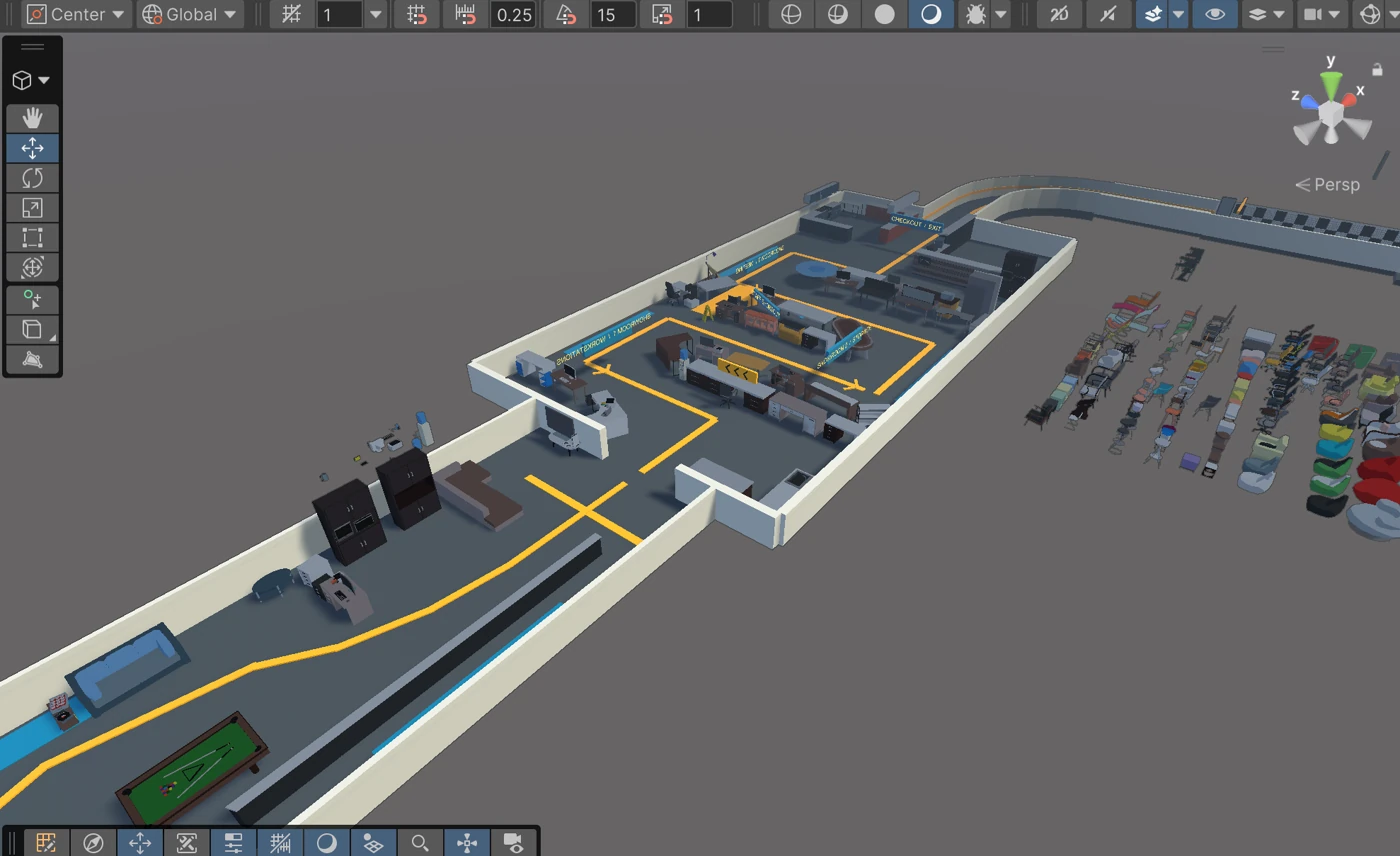
A point-to-point office sprint built around delayed steering: ask for commitment, leave room to recover, then offer a faster line.
The route turns delayed steering into readable commitment, recoverable mistakes, and optional mastery.
Long sightlines and early route cues let players steer before the chair catches up.
Wide shoulders and quick reconnections turn mistakes into recoverable time loss instead of resets.
Shortcuts and charged exits reward confident lines while safe routes keep first runs moving.
The camera interprets speed, steering rate, and slip as framing changes. Fixed driving sequences isolate those responses from player input.
Each preset runs a deterministic maneuver, making target pursuit, drift damping, lens expansion, and Dutch visible without manual driving.
Gameplay systems report facts. One policy owner decides what counts, updates the run state, and publishes clean outputs to presentation systems.
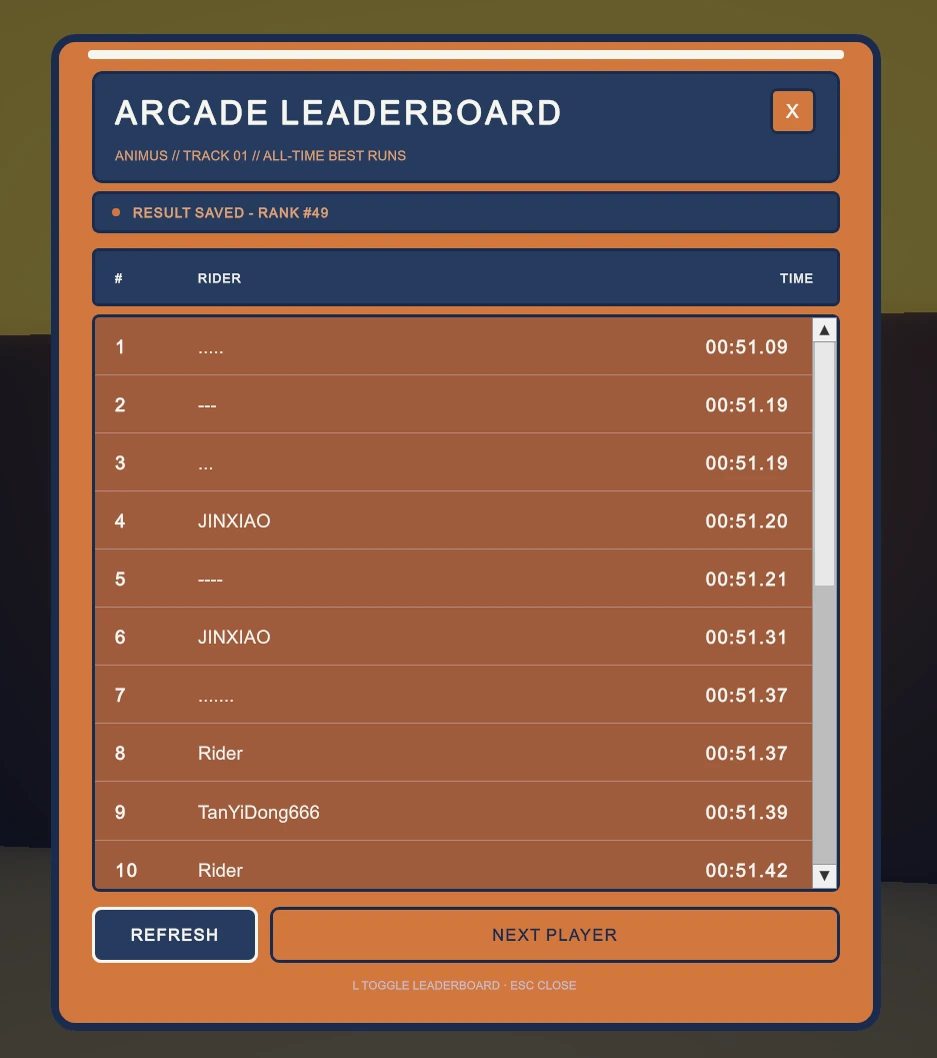
Type Source Time Speed
Race state, teleport lock, cooldown, duplicate validation and high-speed sampling stay in one place.
The same score state is translated into a compact UXML/USS layer. Event presets below isolate the hierarchy, rank color, and feedback language.
Two-week solo production
A two-week sprint from a playable physics question to a complete arcade loop. The sequence below reflects the actual implementation order.
Tested the chair-as-vehicle premise with the smallest complete gameplay loop.
Built and iterated acceleration, steering pursuit, drift, braking, and recovery.
Mapped speed, turn rate, and slip into damping, FOV, distance, and Dutch.
Prepared the model hierarchy, then added procedural deformation and visual lean.
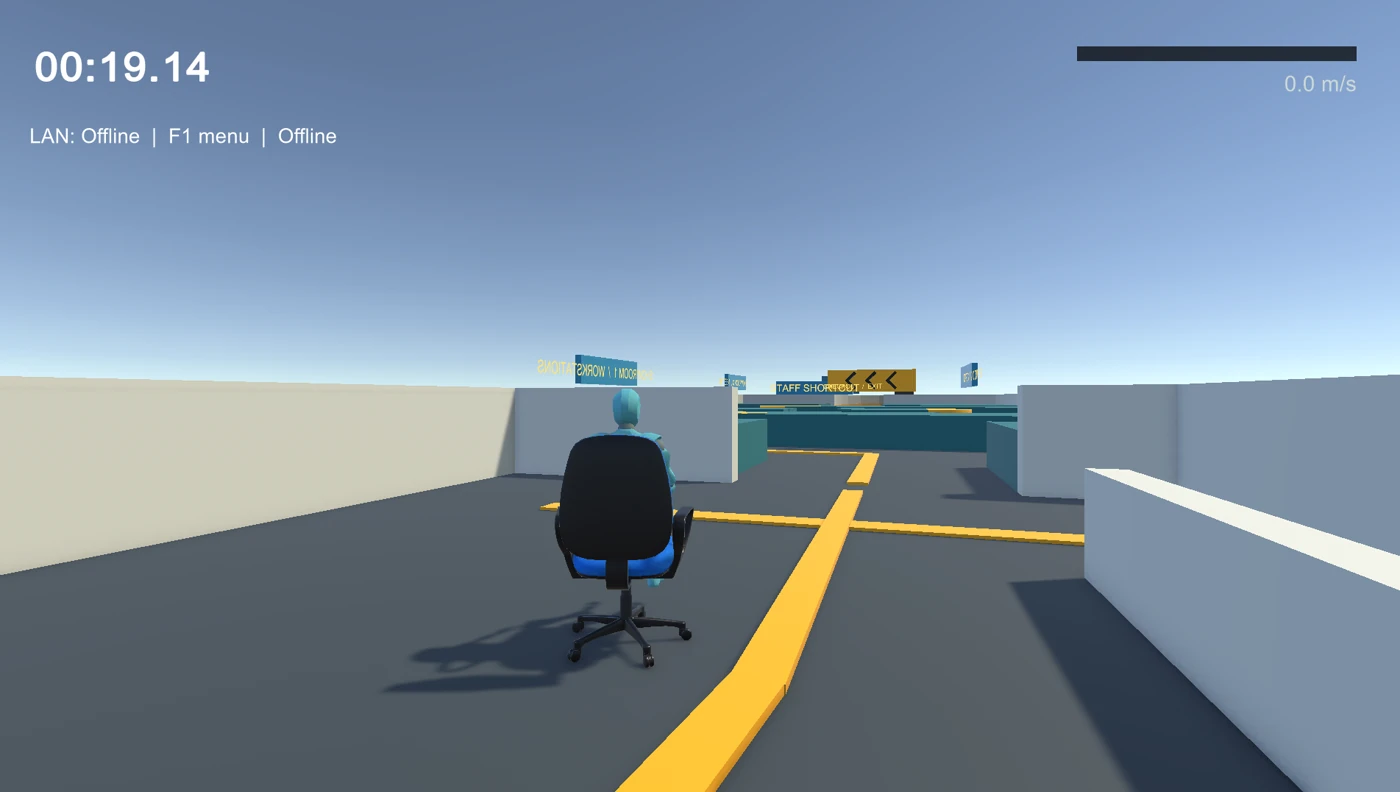
Blocked a first course around steering lag, recovery space, and readable landmarks.
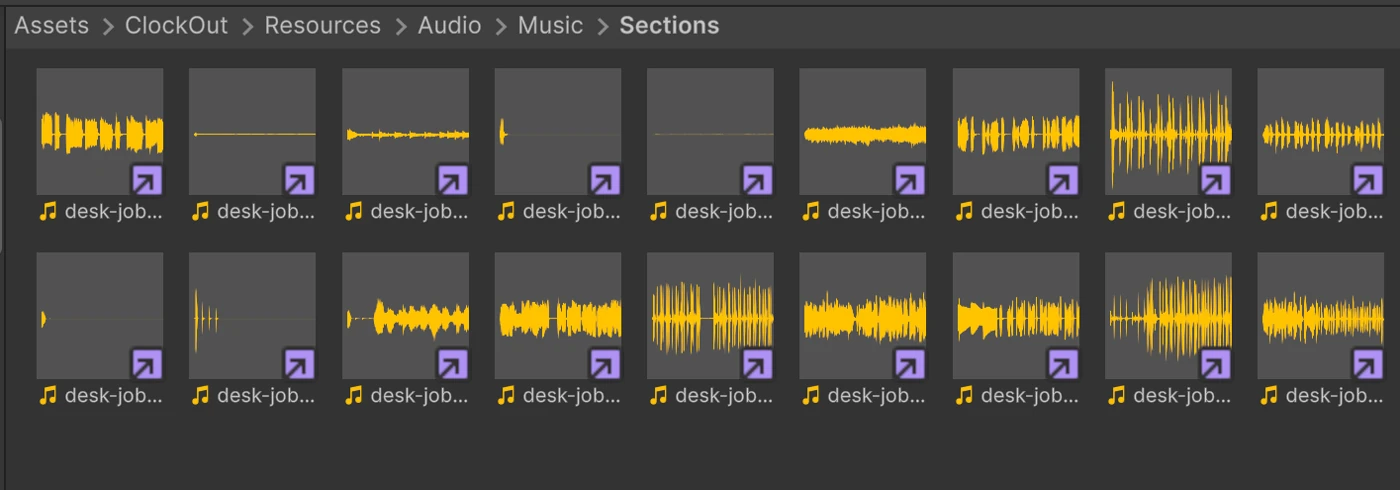
Built a state-driven music system that follows the changing intensity of a run.
Expanded the route into a complete level and validated its challenge sequence.
Implemented the run HUD, timing flow, results presentation, and leaderboard.
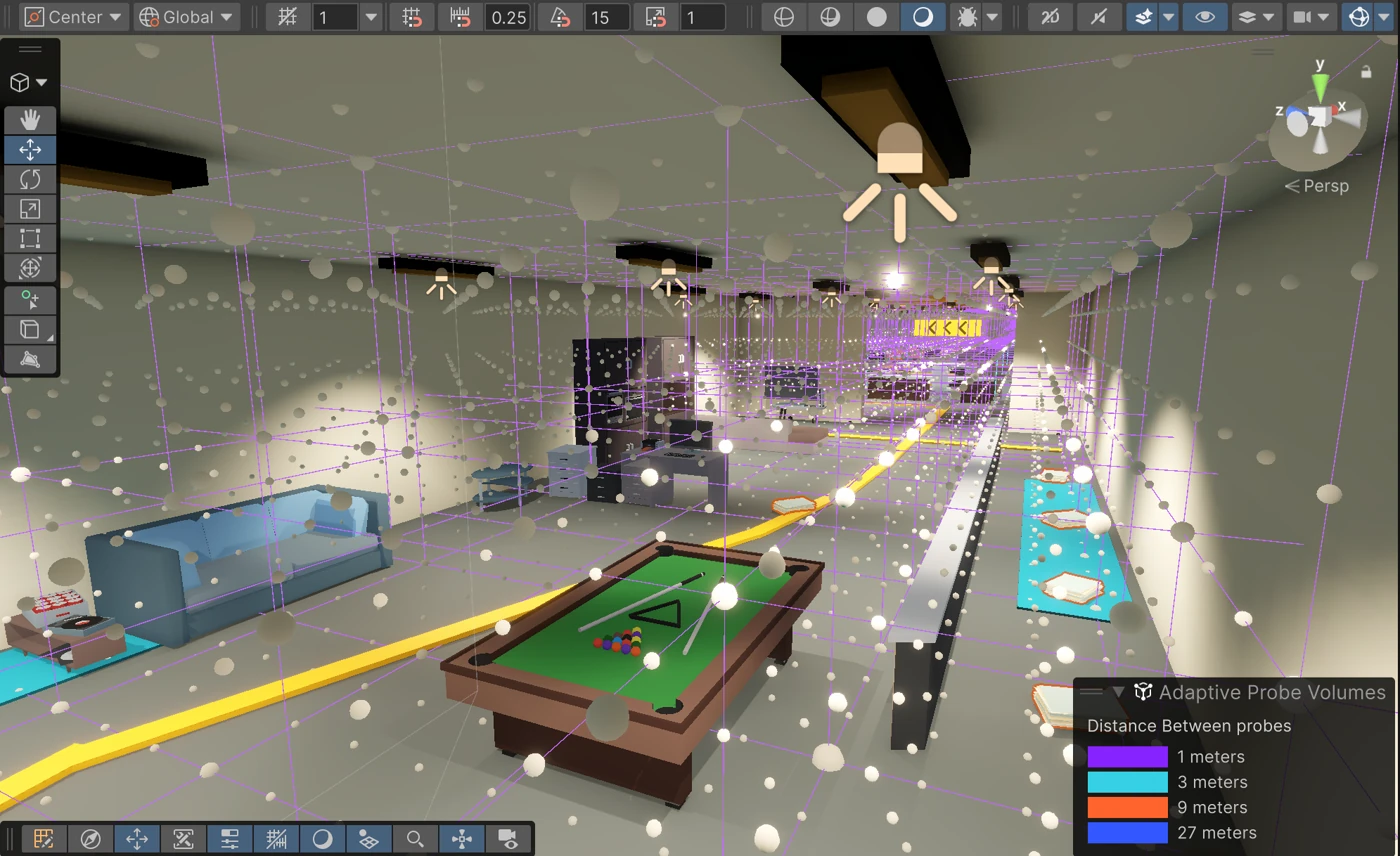
Replaced graybox language with the office setting, route cues, lighting, and landmarks.
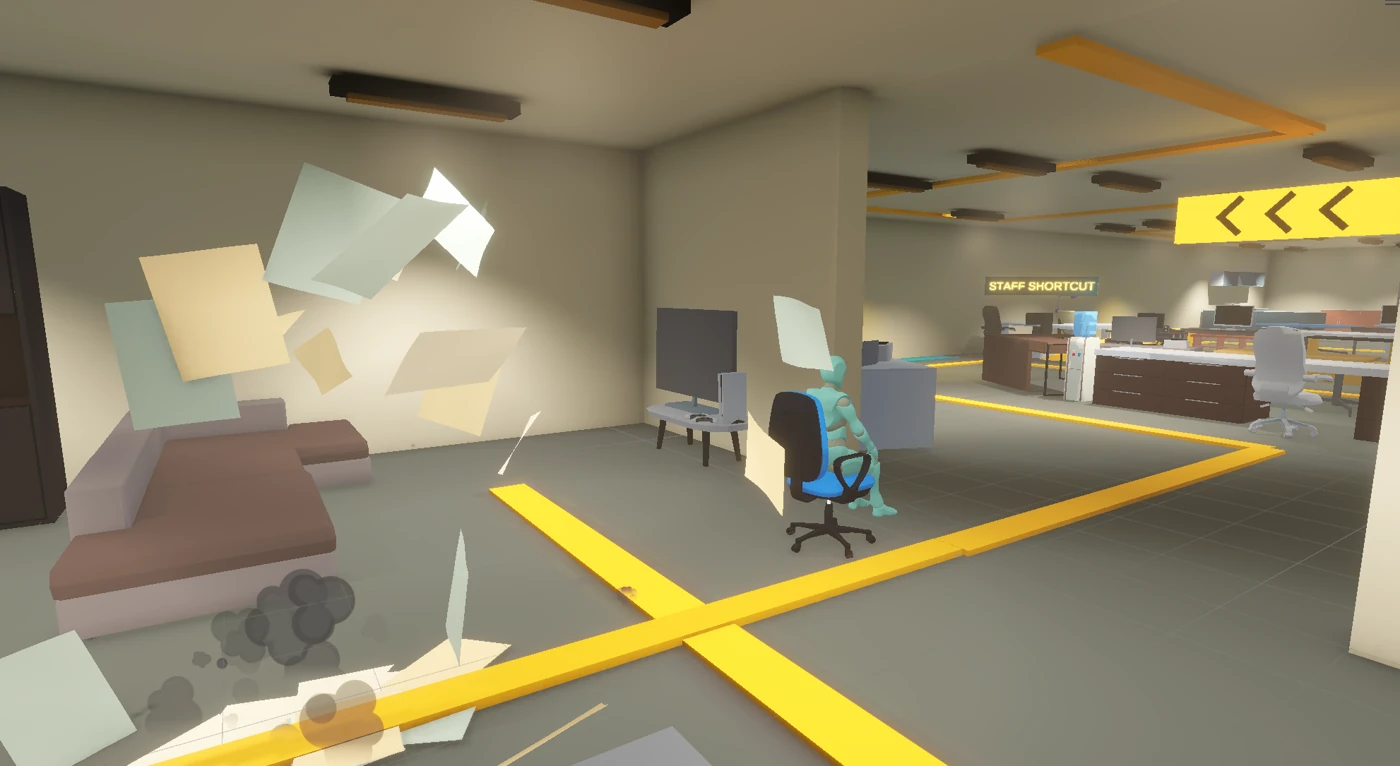
Added event-driven feedback for collisions, drifting, speed, and loss of control.
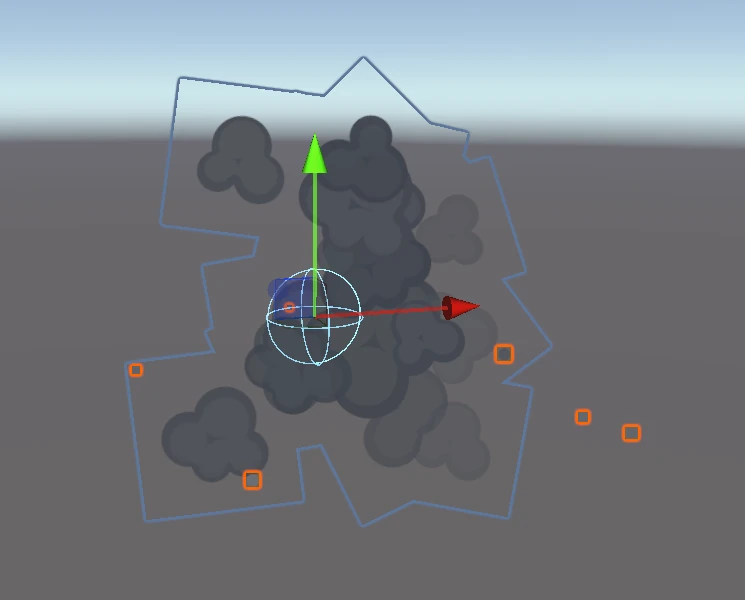
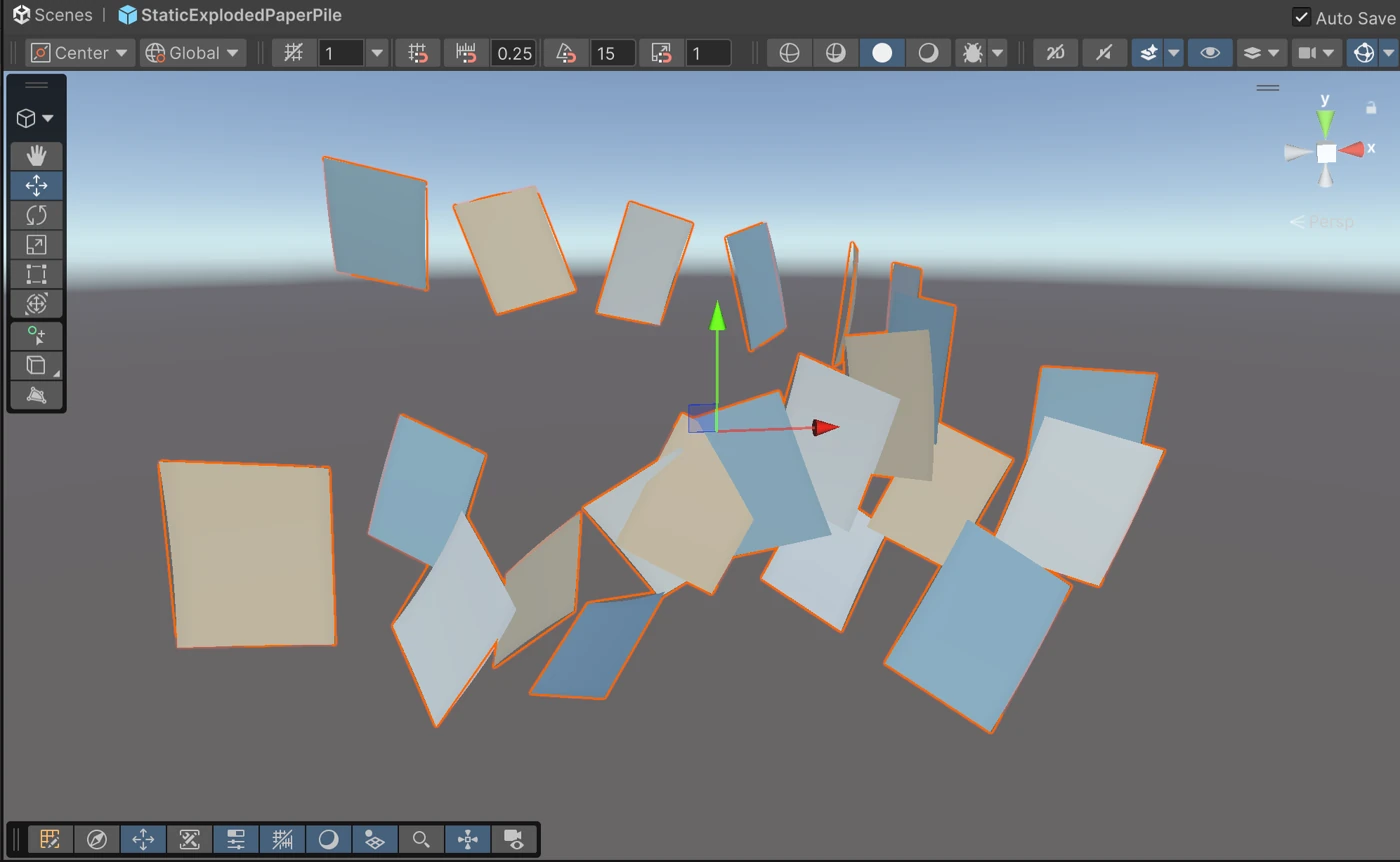
Built breakable paper obstacles that turn collisions into readable physical comedy.
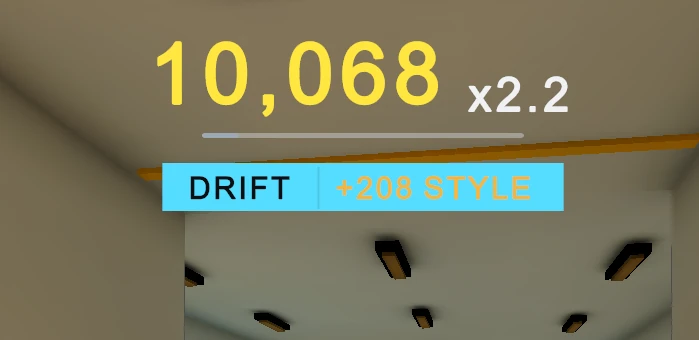
Connected driving events to bonuses, combo feedback, and final score evaluation.
Retuned the controller against the finished level and resolved playtest failures.
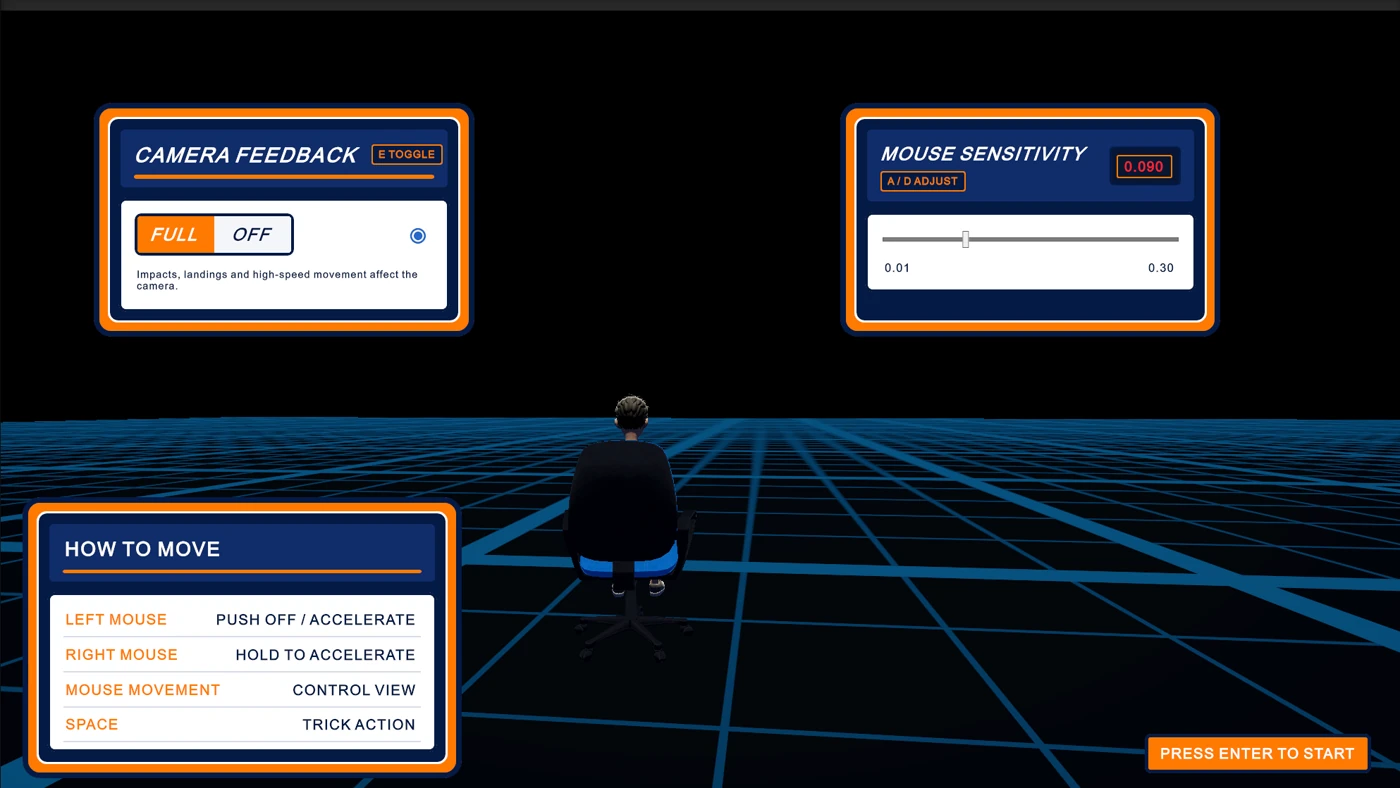
Created the main menu and an Animus-inspired spatial settings environment.
Balanced presentation, pacing, feedback, scoring, and end-to-end flow.
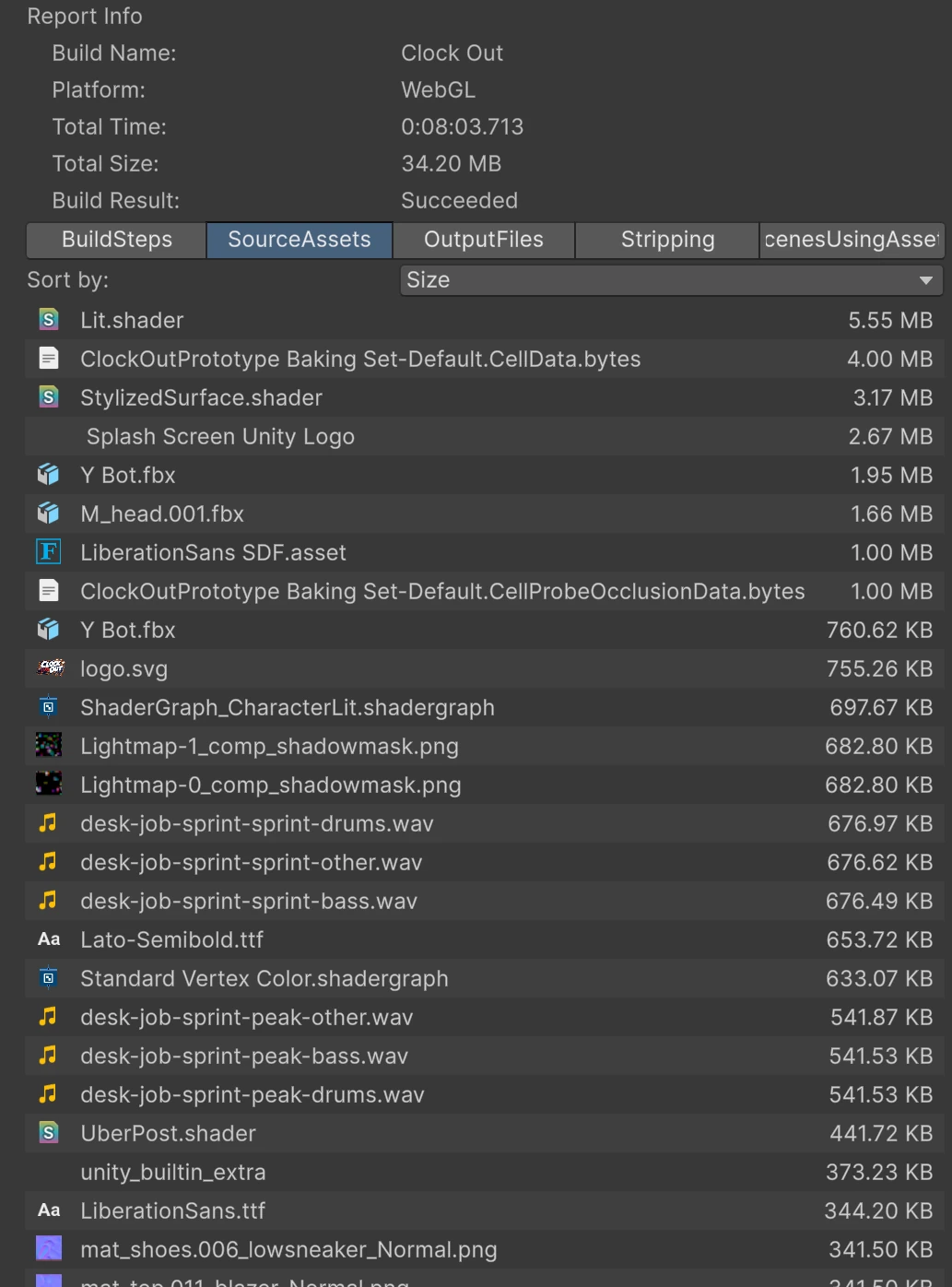
Reduced build cost and prepared the final playable release.
Playtest / exhibition record
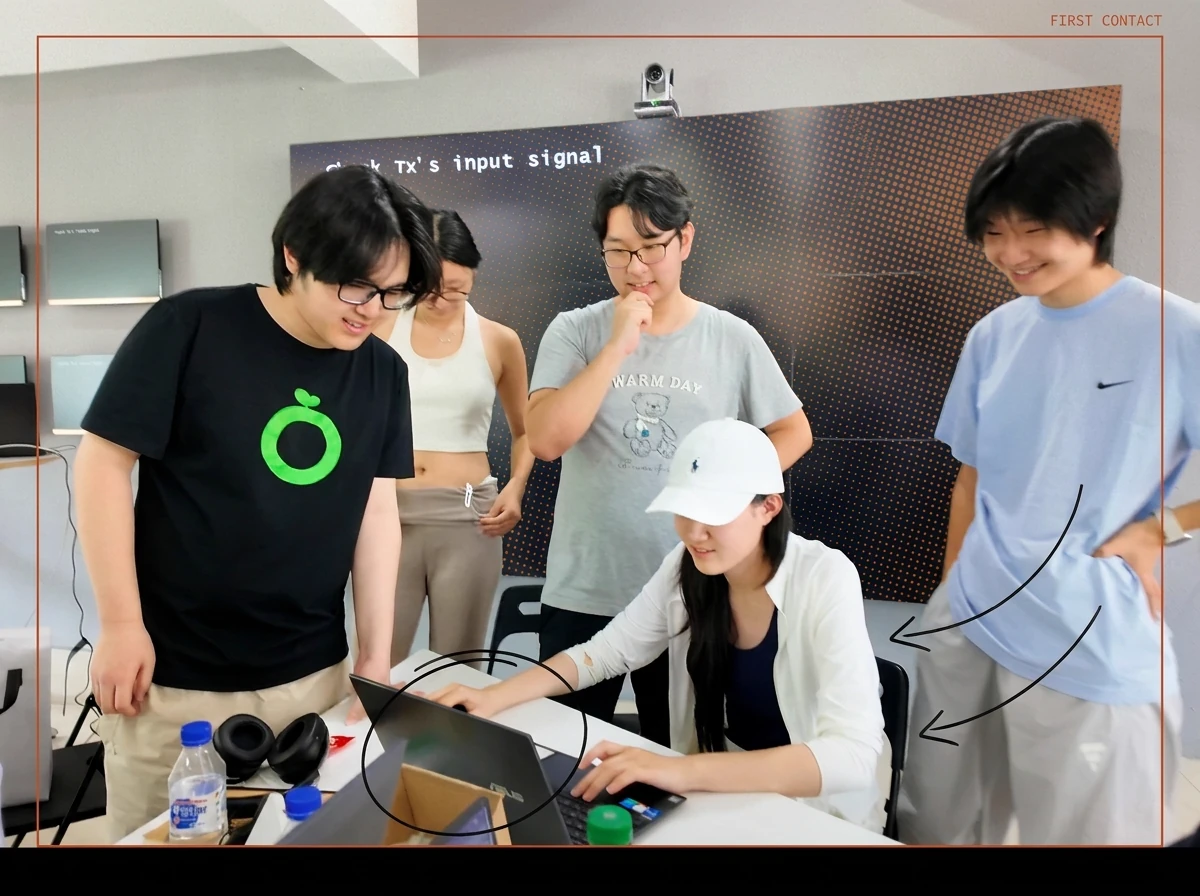
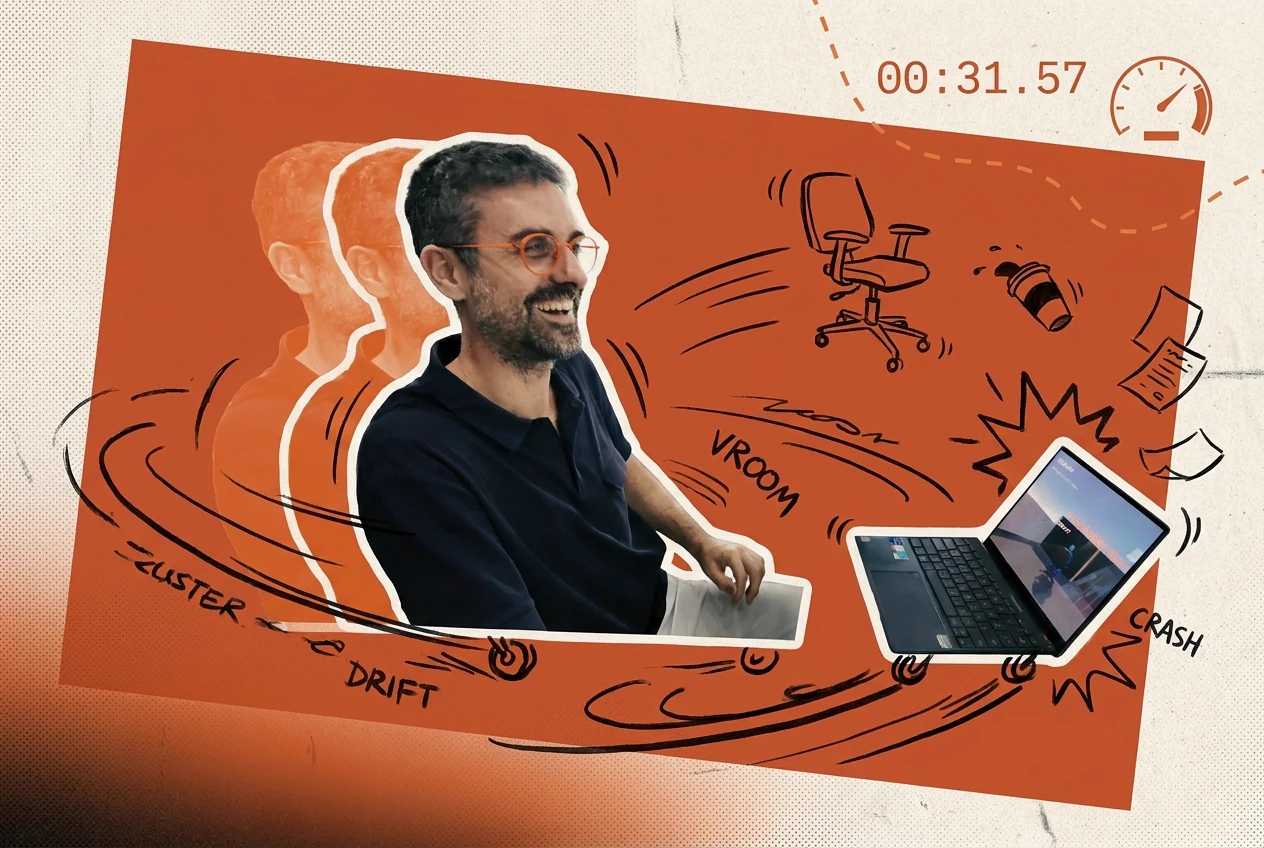
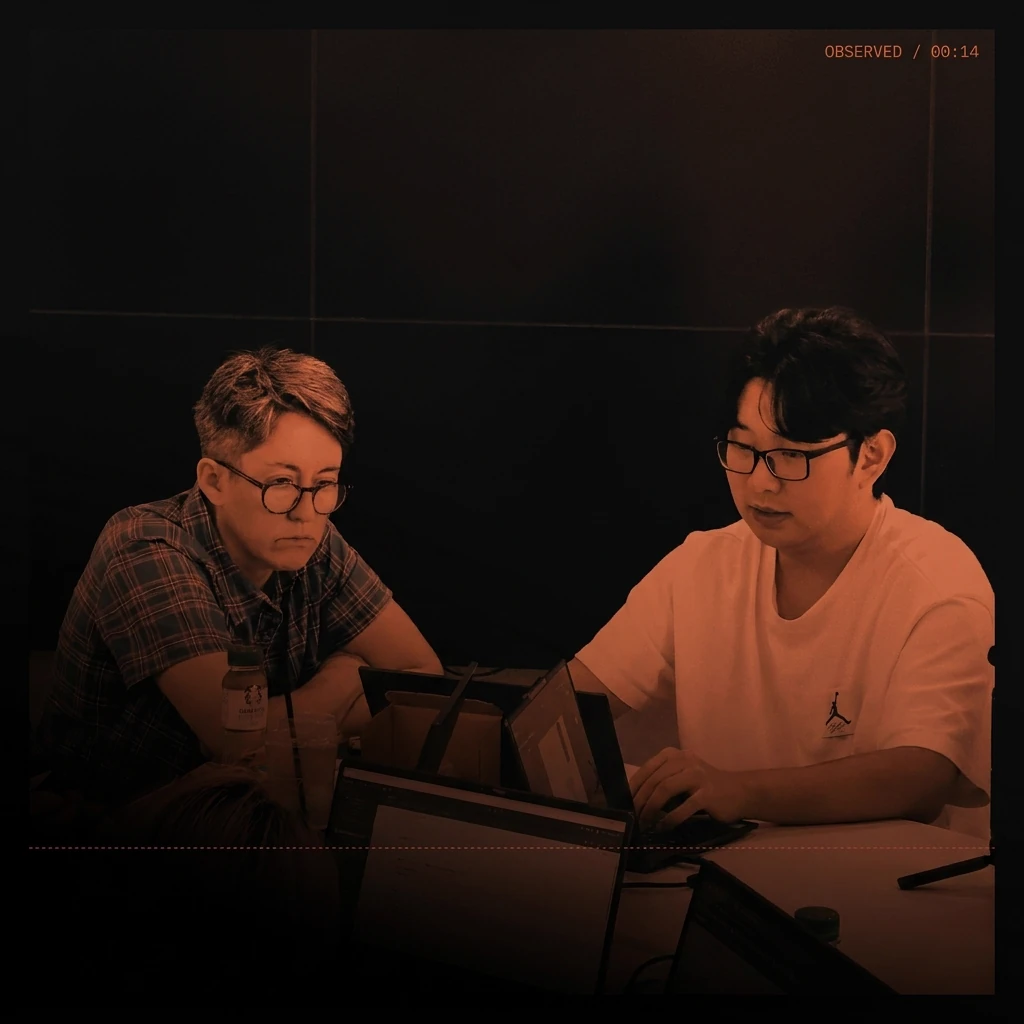
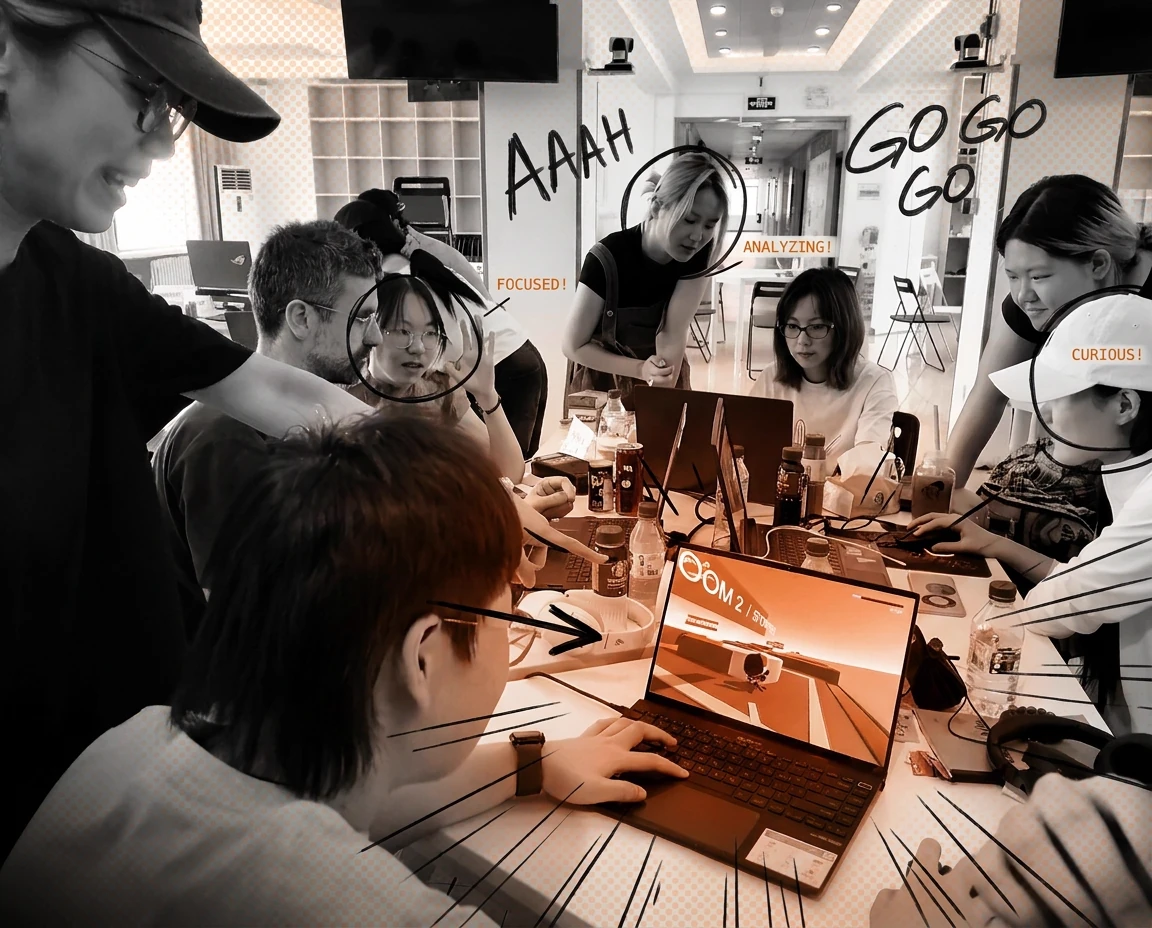
Four moments from the first public build. No briefing, no tutorial, just a chair, a keyboard, and people finding out how badly it steers.